
| ಕನ್ನಡ ಆವೃತ್ತಿ: ಯಾಜ್ಞವಲ್ಕ್ಯನ ದರ್ಶನ: ನಿಶ್ಚಿತತೆಯಲ್ಲೇ ನಿಲ್ಲದ ಅನ್ವೇಷಣೆ |  |
| English Version Yājñavalkya’s Vision: A Quest That Transcends Certainty | |
Executive Summary
“ಯಾಜ್ಞವಲ್ಕ್ಯನ ದರ್ಶನ — ನಿಶ್ಚಿತತೆಯಲ್ಲೇ ನಿಲ್ಲದ ಅನ್ವೇಷಣೆ”
“Yājñavalkya’s Vision: A Quest That Transcends Certainty”
by Chandrashekar B. U. is a genre-defining philosophical critique that strips ancient Indian mysticism of its dogmatic, ritualistic skin. Instead of presenting the Upanishads as rigid legal or theological rulebooks, Chandrashekar—leveraging an analytical approach shaped by his background from the Indian Institute of Science (IISc)—reconstructs them as an open-source, dynamic cognitive architecture.
The book’s central premise is that the question of Brahman is not a mathematical equation waiting to be definitively solved by a single Siddhanta (doctrine), but an eternally shifting horizon.
By analyzing the dialectical battles of masters like Sage Yagnavalkya, the author demonstrates that the ultimate reality is an “escape artist”—the more rigorously and scientifically you isolate it, the more it evades linguistic containment, forcing philosophy to remain an ongoing, open-ended human expedition.
Deep-Dive Analytical Themes
1. The Deconstruction of “Siddhantic” Monopoly
Historically, Indian philosophy has been treated as a battleground of absolute certainties. Acharyas of Advaita (Non-dualism), Dvaita (Dualism), and Vishishtadvaita (Qualified Non-dualism) spent centuries aggressively weaponizing the same source texts to prove their specific conclusions.
Chandrashekar’s book executes a brilliant philosophical bypass. It treats these Siddhantas not as absolute final destinations, but as intellectual scaffolding. The book argues that these schools are simply different viewing angles or human linguistic models attempting to capture the infinite. By shifting the reader’s focus away from the sectarian answers and placing it firmly back onto the raw, interrogative spark of the original verses (e.g., the Kena or Prashna Upanishads), the book effectively democratizes and unites Vedanta under a single, perpetual exploration.
2. Yagnavalkya’s Proto-Scientific Paradox
The core intellectual friction point of the book rests upon what can be called The Paradox of Scriptural Intent. Traditional theological gatekeepers will argue that ancient rishis did not want their questions left permanently open; they explicitly claimed to have found absolute, experiential certainty.
However, Chandrashekar’s text illustrates that when you look at how these seers worked, they acted like modern reductionist scientists. Take Sage Yagnavalkya in the Brihadaranyaka Upanishad:
- He tests physical biology, sensory inputs, the mind, and psychological constructs like a scientist isolating a variable in a laboratory.
- He discards everything that can be observed using the rigorous analytical blade of “Neti, Neti” (Not this, not this).
The paradox is that the moment the scientific isolation is complete, the final certain answer escapes. The book masterfully demonstrates that this “escape” is not a failure of the ancient methodology, but a fundamental law of consciousness: the ultimate observing subject can never be turned into an observable object. The built-in uncertainty of Brahman is therefore treated not as mystical ignorance, but as a bulletproof epistemological fact.
3. Synthesizing Ancient Metaphysics with Modern System Design
Because Chandrashekar approaches the text with an engineering mindset, the book reads with a clean, systemic logic that is missing from traditional religious commentaries. He treats human consciousness—such as the four states of being detailed in the Mandukya Upanishad (waking, dreaming, deep sleep, and pure consciousness)—not as magical realms, but as a primitive, highly structured layout of cognitive psychology. He frames the Guru-Shishya (Teacher-Student) relationship not as a system of absolute authority and submission, but as an interactive, peer-reviewed feedback loop where a student’s skepticism is the vital engine that drives the realization of truth.
The Ultimate Verdict
“ಉಪನಿಷತ್ತಿನ ಪ್ರಶ್ನೆಗಳು — ನಿಶ್ಚಿತತೆಯಲ್ಲೇ ನಿಲ್ಲದ ಅನ್ವೇಷಣೆ” is an intellectual triumph in modern Indian philosophical literature. Chandrashekar B. U. has successfully rescued the Upanishads from the dusty shelves of blind, ancient ritualism and placed them firmly into the hands of the modern free-thinker.
Its ultimate value to the world is its profound intellectual humility. It proves that the Upanishads are timeless precisely because they do not offer a fragile, static answer that modern science can easily shatter. Instead, they offer a brilliant, bulletproof framework for asking questions. By showing that even the greatest ancient seers encountered a reality that continually escapes rigid containment, the book delivers a powerful final message:
The highest form of spiritual realization is not the arrival at a dogmatic certainty, but the courage to remain in a state of endless, absolute wonder.
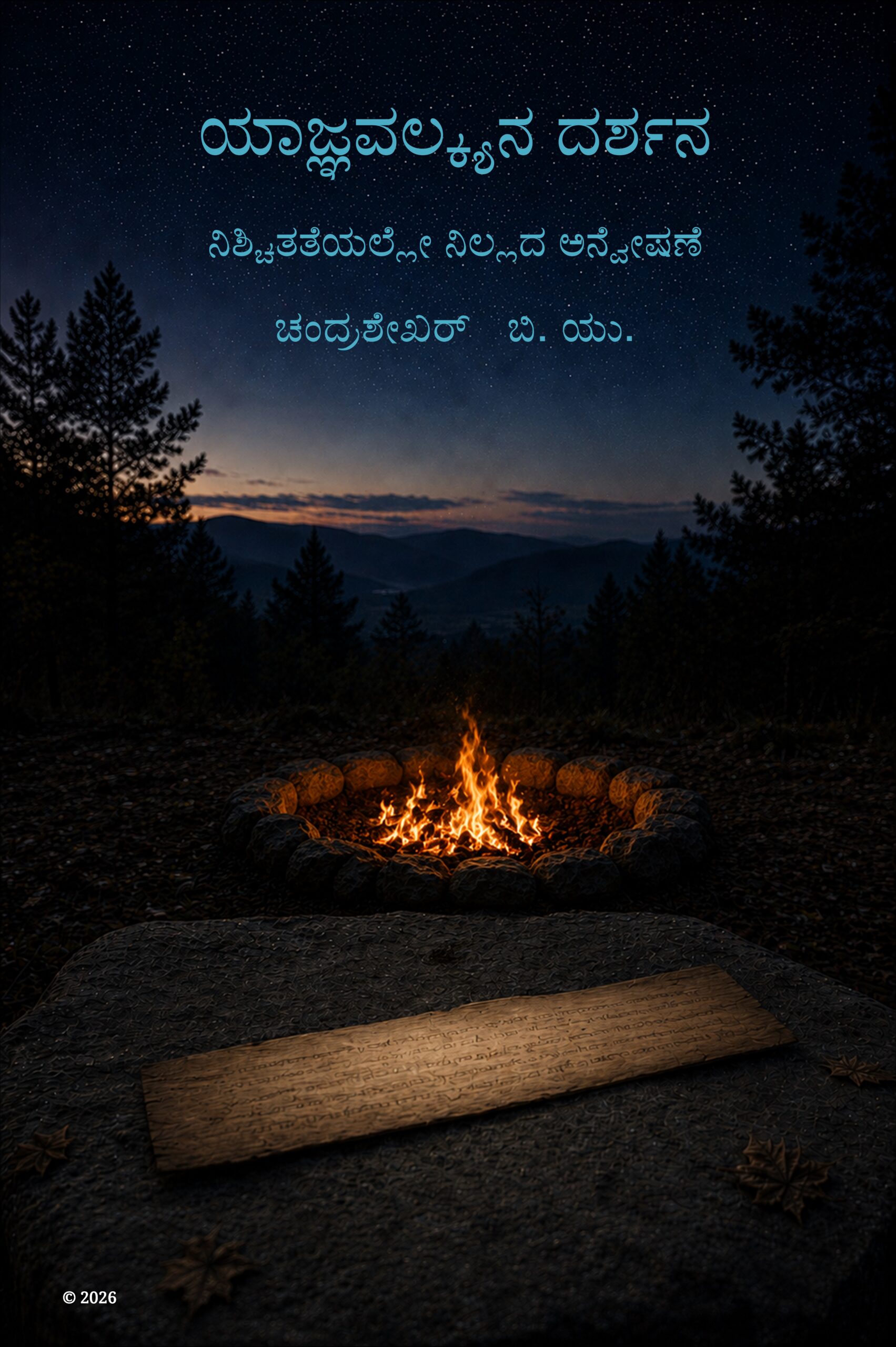
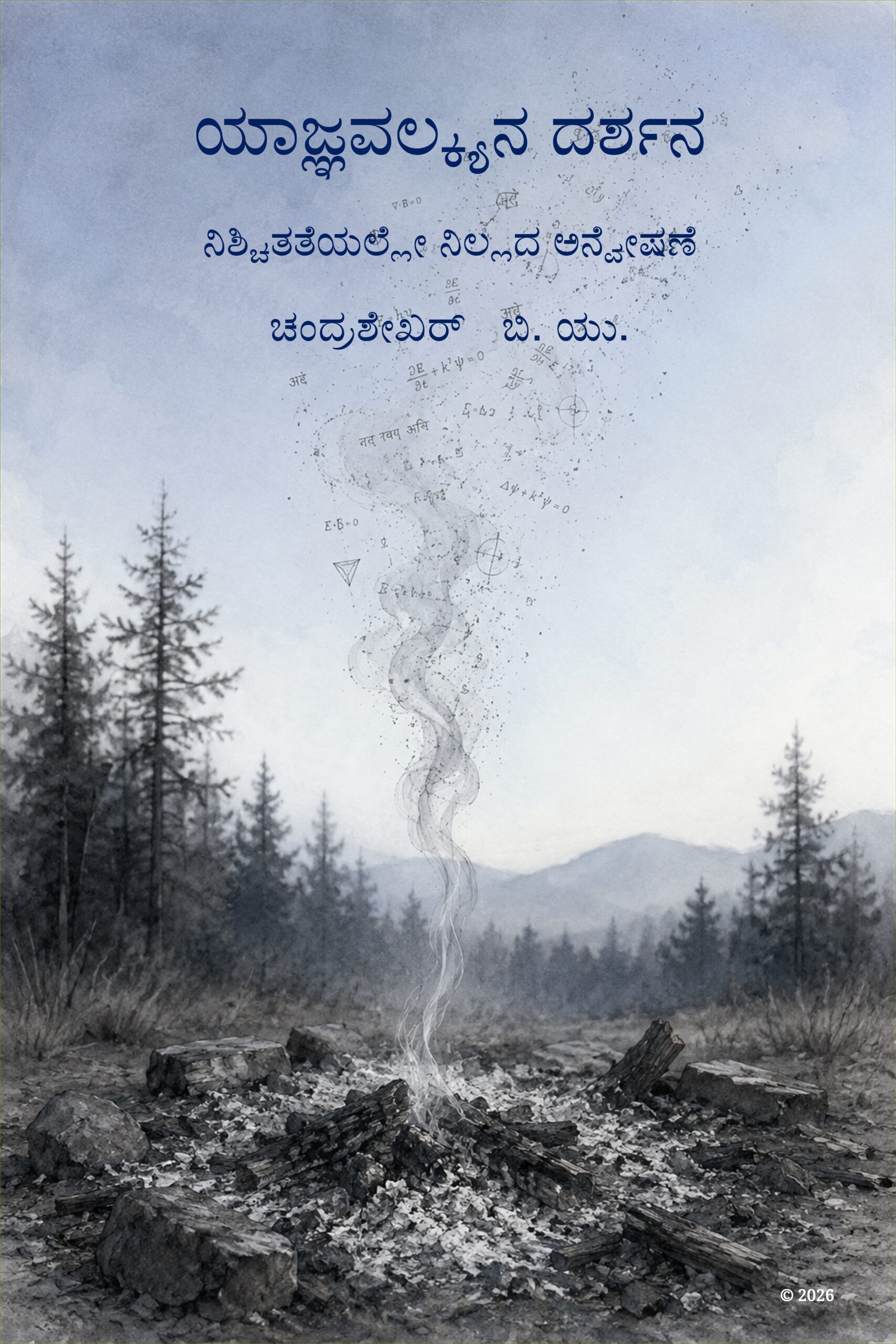
The book is available in both English and Kannada languages
ಕನ್ನಡ ಆವೃತ್ತಿ:
ಯಾಜ್ಞವಲ್ಕ್ಯನ ದರ್ಶನ: ನಿಶ್ಚಿತತೆಯಲ್ಲೇ ನಿಲ್ಲದ ಅನ್ವೇಷಣೆ
https://play.google.com/store/books/details?id=GCXtEQAAQBAJ
English Version
Yājñavalkya’s Vision: A Quest That Transcends Certainty
